
Standing Seam Panels for Steep-Slope Snow Shedding in Worcester
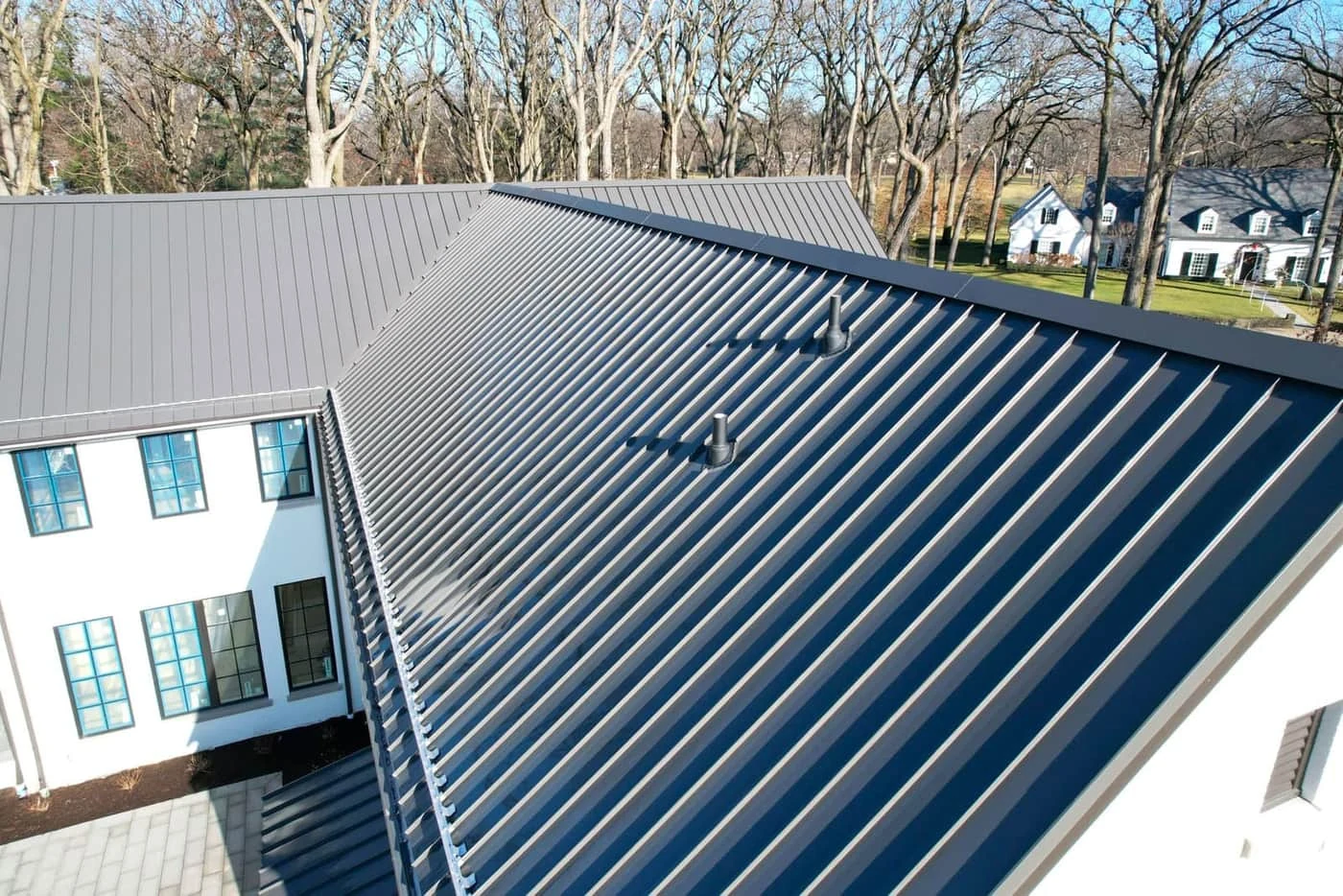
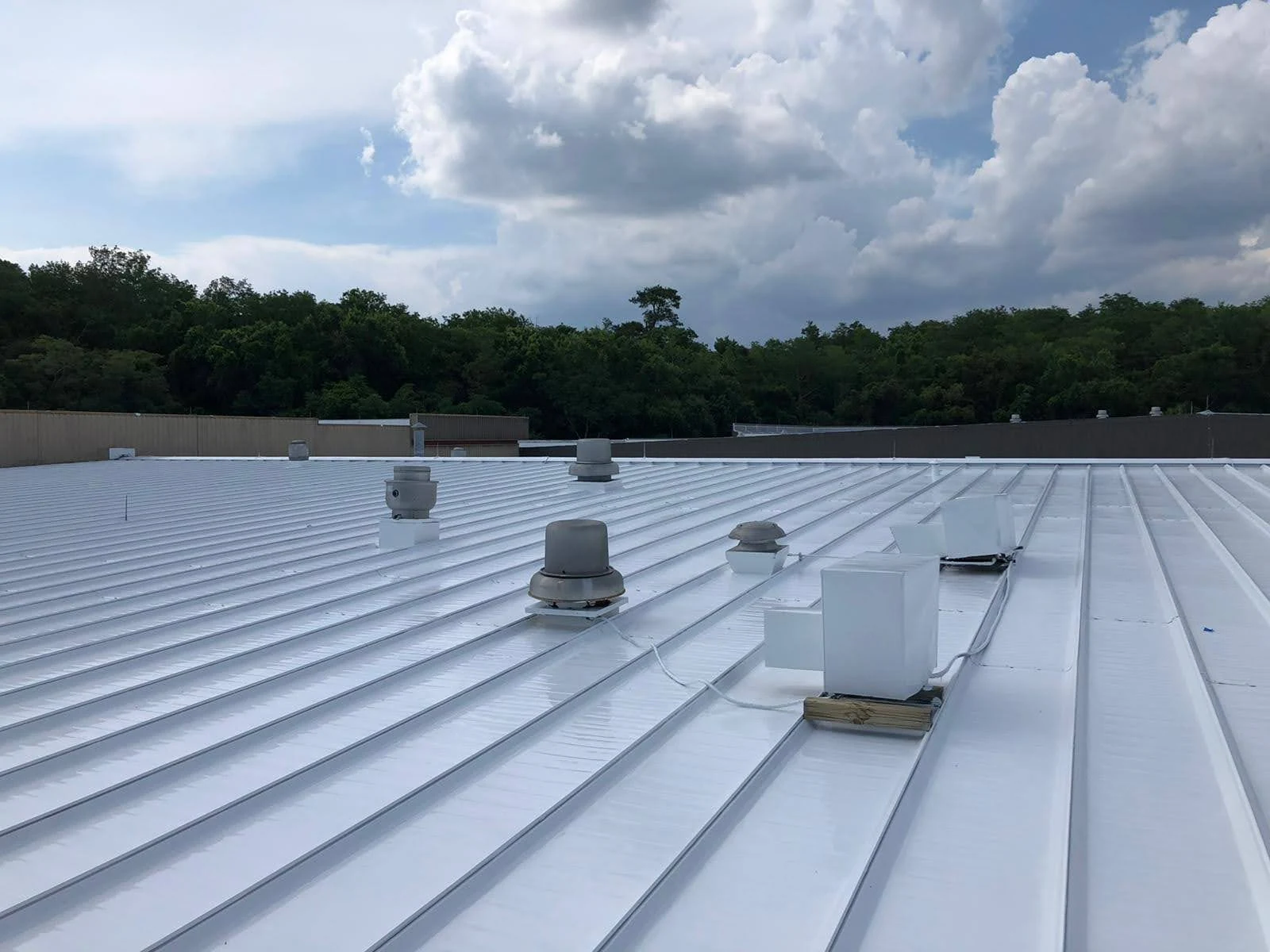
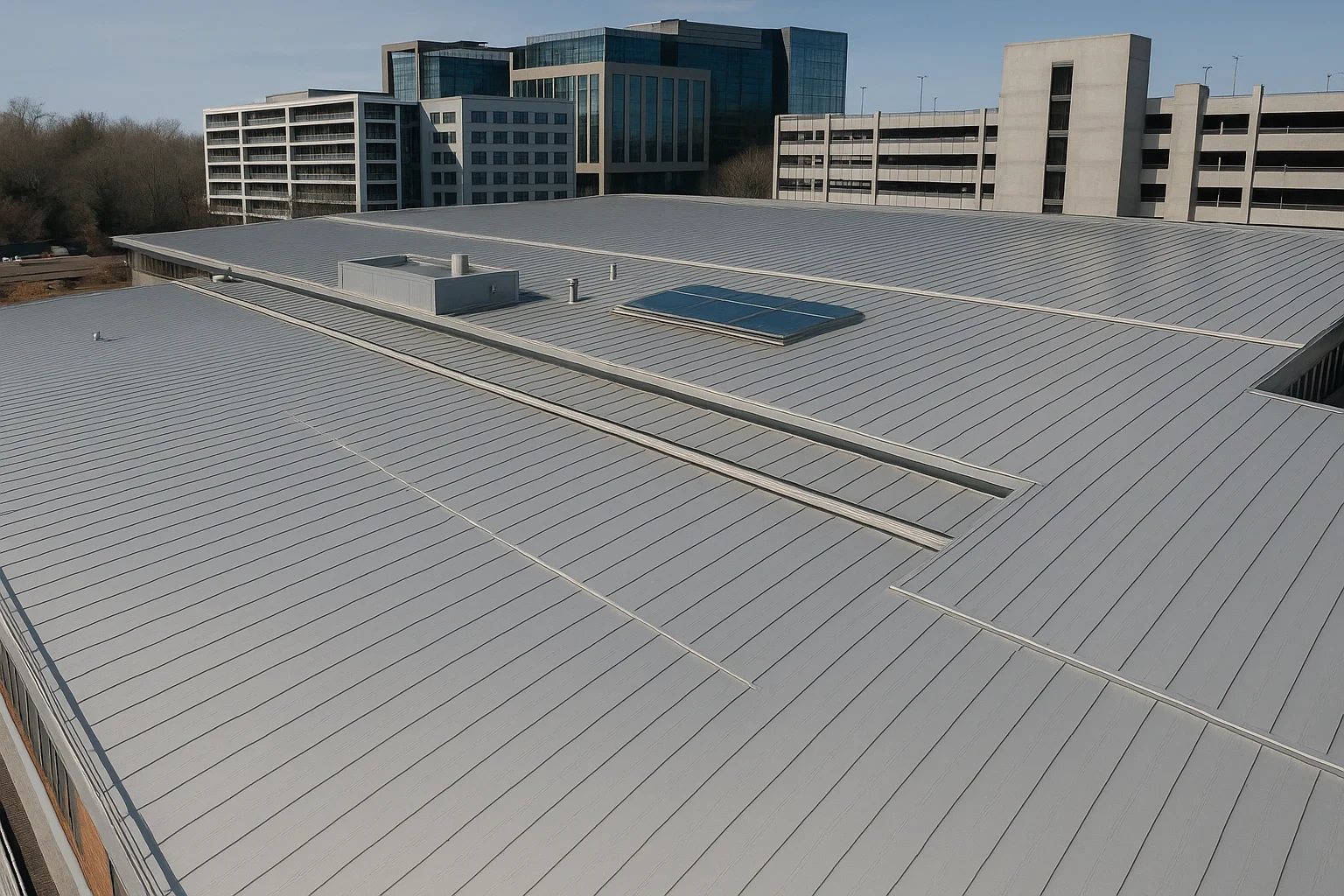
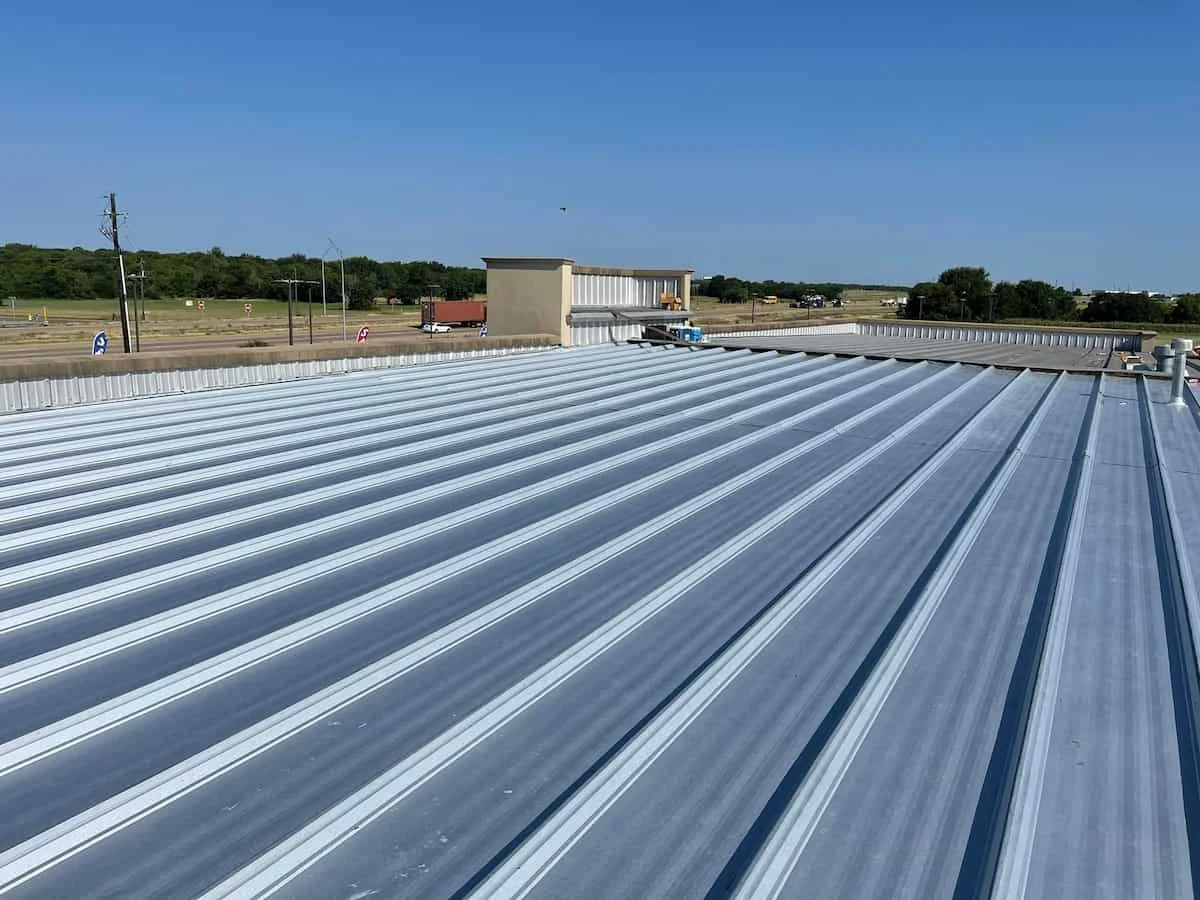
Standing seam metal is the roof we recommend most on steep-slope campus buildings, hospitality properties, and any structure where shedding snow matters more than storing it. The panel gauge and clip spacing are what separate a roof that handles a real Central Mass winter from one that doesn't, and both get named in the price.
Why Slope Changes the Snow Math
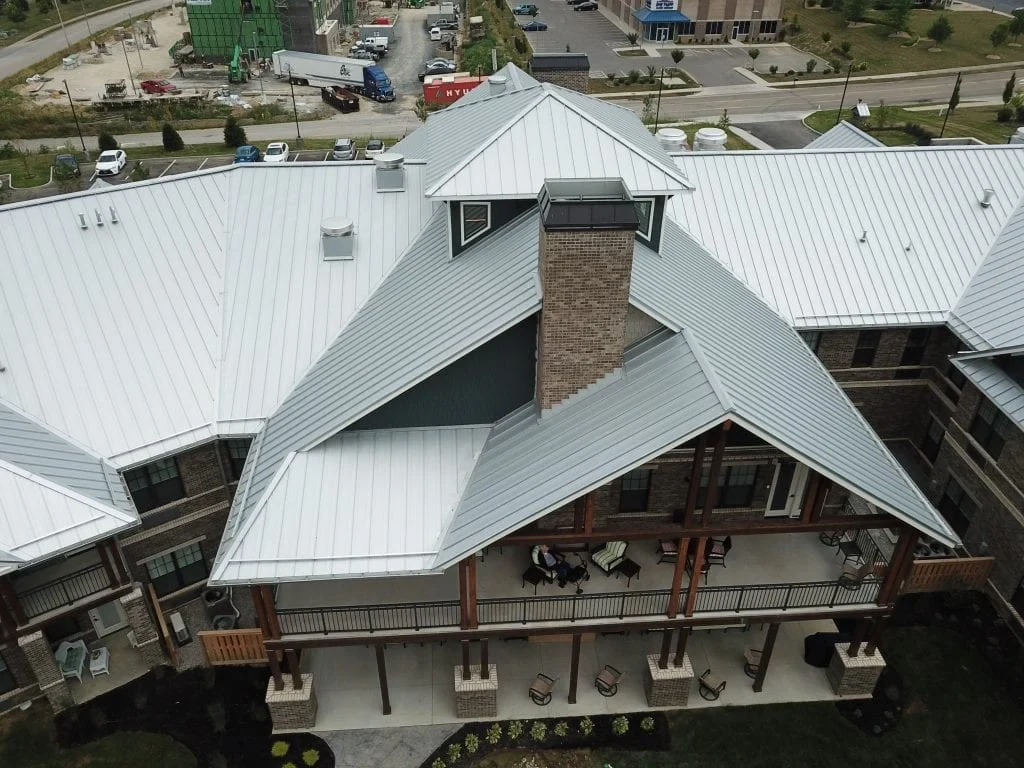
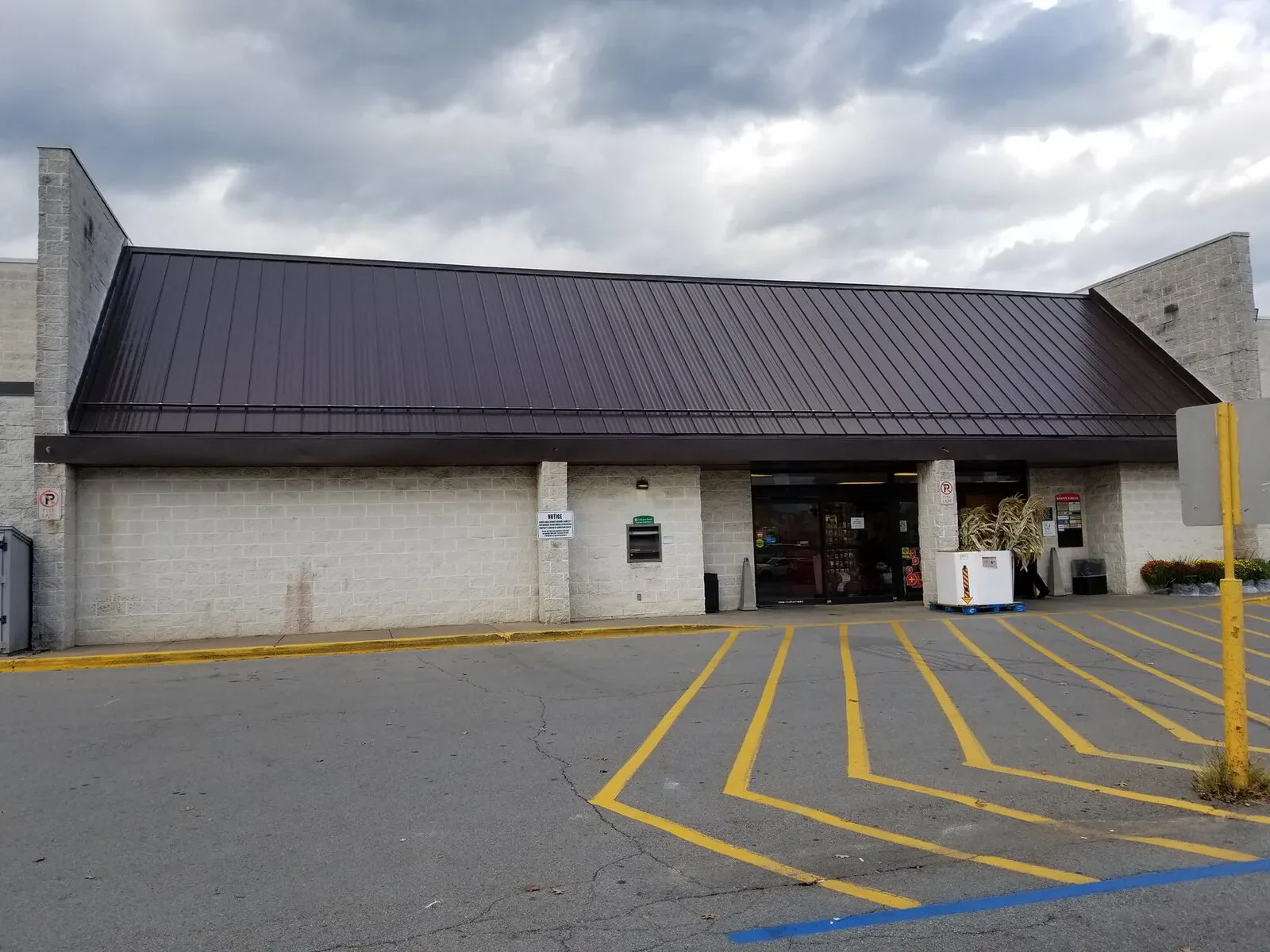
A steep-slope standing seam roof sheds snow off the panel surface as it accumulates, rather than holding it the way a flat membrane roof does. That's a real advantage during a heavy nor'easter, but it also means snow comes off the roof somewhere, often in a sudden slide, which we plan for with snow retention systems anywhere the shed path crosses a walkway, entrance, or parking area.
College campus buildings and hospitality properties around Worcester are where we spec standing seam most often, since the architectural pitch on those buildings was often designed for snow shedding from the start, unlike the flat institutional and industrial roofs that make up most of our other work.
Panel Gauge: 24-Gauge vs 22-Gauge
24-gauge steel is the standard panel thickness for most commercial standing seam work, and it holds up fine under normal snow load and foot traffic for service access. We move up to 22-gauge on roofs with unusually heavy expected snow accumulation, longer unsupported panel spans, or higher wind exposure, since the thicker panel resists oil-canning and denting better under those conditions.
The gauge difference shows up directly in cost per square foot, and we size it to the specific roof's span and exposure rather than defaulting to the heavier, more expensive panel on every job.
Ice Dam Prevention on a Sloped Metal Roof
Ice dams on a standing seam roof usually form at the eave, where snow melts higher up the slope from attic or roof-deck heat loss and refreezes once it reaches the colder eave edge. That refreezing backs water up under the panel laps if it isn't managed. We address this with proper underlayment at the eave, ventilation improvements where the building allows it, and heat cable on roofs where the geometry makes ice damming a recurring problem.
Snow retention systems, usually rows of clips or pipes fastened to the panel seams, control how and where snow releases from the roof, which both protects people and equipment below and reduces the sudden load transfer that can stress the panel clips during a fast melt.
What we confirm before pricing a standing seam roof:
- Panel gauge sized to expected snow load and panel span
- Clip spacing and attachment method for the specific wind exposure
- Snow retention placement over walkways and entrances
- Eave underlayment and ice dam protection detail
- Panel finish and expected coating life under UV exposure
- Warranty terms covering panel finish separately from installation
Longevity and Maintenance
A properly installed standing seam roof with a quality factory finish typically outlasts most single-ply and asphalt-based systems, with the finish coating being the component most likely to need attention over decades of service. Fastener-free seams, since the panels interlock and are clipped rather than screwed through, mean fewer penetration points for water to find over the roof's life.
Where R-Panel Is the Better Call Instead
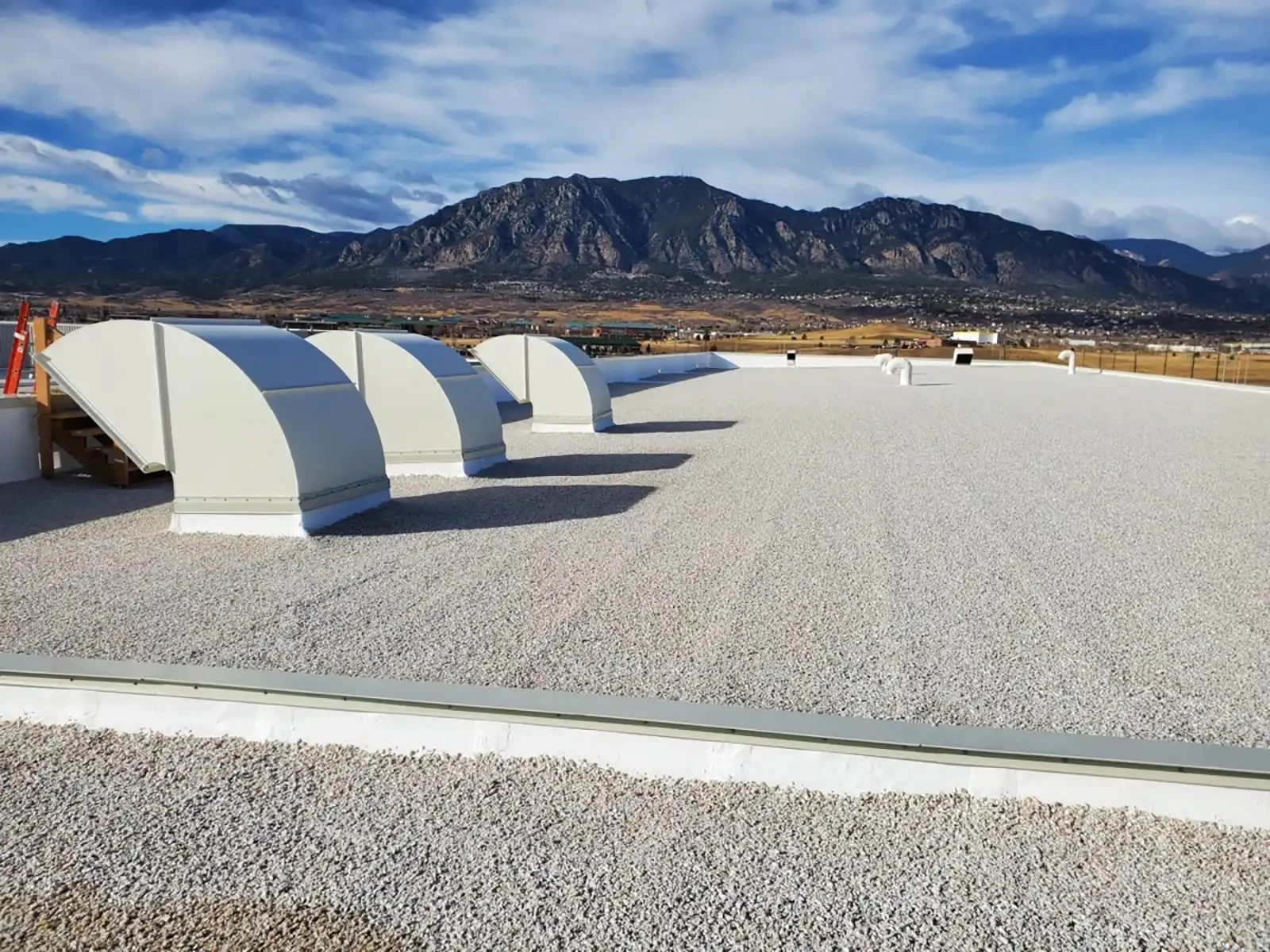
Standing seam costs more per square foot than exposed-fastener R-panel metal roofing, and on a low-slope industrial or warehouse building where snow shedding and architectural finish matter less, R-panel is often the more economical metal option. We spec standing seam specifically where slope, visibility, or snow-shedding performance justify the premium.
Thermal Movement and Clip Design
Metal panels expand and contract with temperature swings, and Worcester sees a real annual range between summer roof-surface temperatures and deep winter cold. Standing seam's clip system is engineered to let panels move independently of the fasteners, which is what keeps the seams from tearing under repeated thermal cycling over the roof's service life. A fixed-clip system installed without accounting for panel length and expected thermal movement is a common cause of oil-canning and premature seam fatigue on longer panel runs.
We calculate expected thermal movement based on panel length and material before finalizing clip spacing, rather than defaulting to a standard spacing regardless of the specific panel run on a given roof section.
Longer panel runs on larger campus buildings see more total movement across a run than the shorter panels typical on smaller hospitality buildings, so clip spacing that works fine on one roof can be undersized on another simply because of run length rather than material or gauge alone.
Questions Worcester Owners Ask About Standing Seam
Do I need snow retention on every standing seam roof?
Only where the shed path crosses a walkway, entrance, parking area, or lower roof section where sliding snow could cause damage or injury.
What causes ice dams on a metal roof?
Uneven heat loss through the roof deck melts snow higher up the slope, and that water refreezes at the colder eave edge, backing up under the panels if not managed correctly.
Is 22-gauge always better than 24-gauge?
Not necessarily. It costs more, and 24-gauge is adequate for most standard spans and snow loads. We size gauge to the specific roof's span and exposure.
How long does the panel finish last before it needs attention?
It depends on the specific coating system, but a quality factory finish typically holds its color and protective properties for decades under normal UV exposure.
Can standing seam be installed over an existing roof?
Sometimes, depending on the existing deck condition and structure. We evaluate that case by case rather than assuming a retrofit is always possible.