
PVC's Chemical-Resistance Case for Worcester's Lab and Hospital Roofs
PVC membrane costs more than TPO or EPDM per square foot, and we don't spec it as a default. It earns its place on roofs exposed to grease, oil, or chemical fumes, which describes a growing share of our work as Worcester's biotech and lab buildup adds exhaust-heavy rooftop equipment to the mix.
Why Chemistry, Not Climate, Drives This Spec
PVC's plasticizer-based formulation resists oils, greases, and many solvents better than TPO's polymer blend or EPDM's rubber base. A hospital kitchen exhaust roof, a biotech lab's fume exhaust stack, or a restaurant's rooftop grease trap all put the membrane in contact with substances that soften or degrade other membrane types faster than PVC.
On a roof without that exposure, PVC's chemical resistance is a feature the building will never use, which is why we reserve it for the specific use case rather than upselling it broadly across every bid.
Heat-Welded Seams and Long-Term Seam Reliability
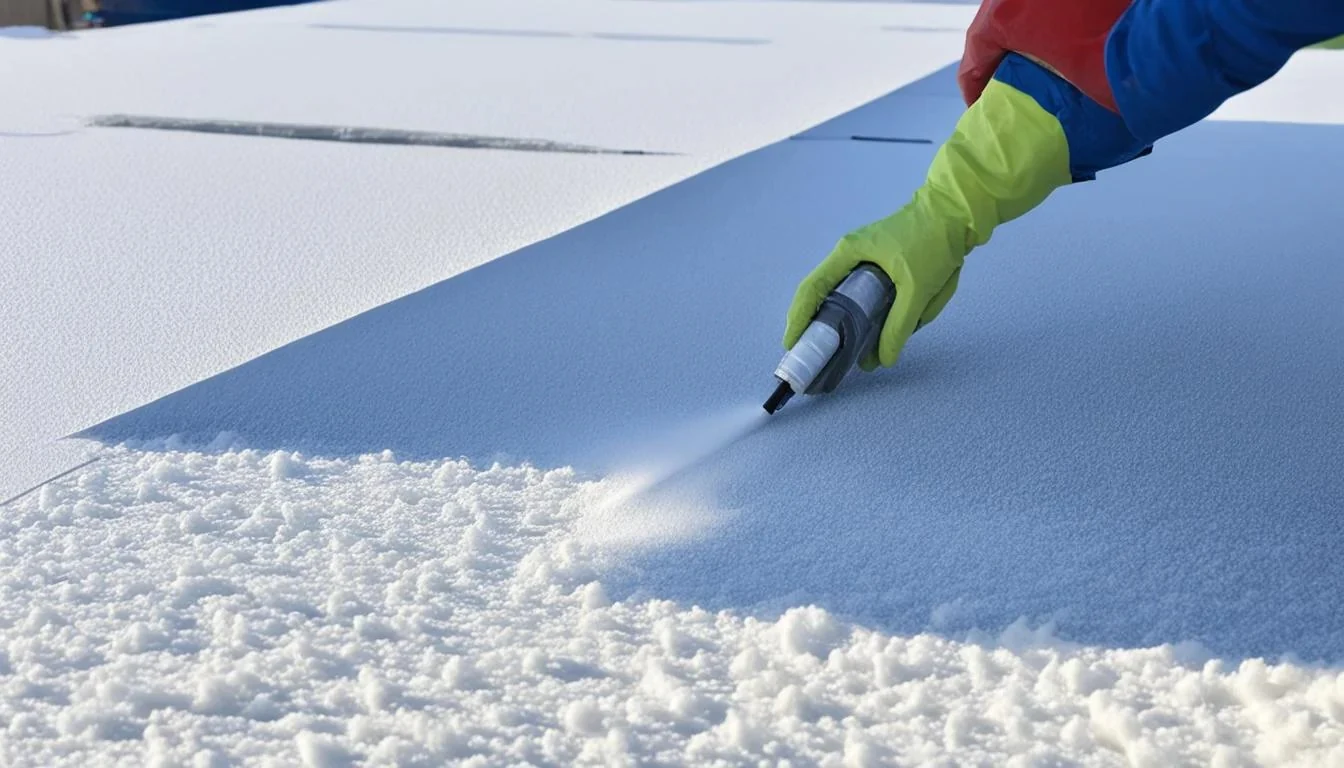
Like TPO, PVC seams are hot-air welded rather than taped, which gives a visible, testable bond line and generally strong long-term seam performance through repeated freeze-thaw cycling. PVC's weld temperature window differs from TPO's, so a crew switching between membrane types on different jobs in the same week needs to reset welder settings rather than running one profile across both.
We test seam strength on every PVC install with the same probe and peel checks we run on TPO, since a weld that looks clean can still fail a peel test if temperature or speed was off during the pass.
Worcester's Lab and Hospital Buildup Is Changing the Bid Mix
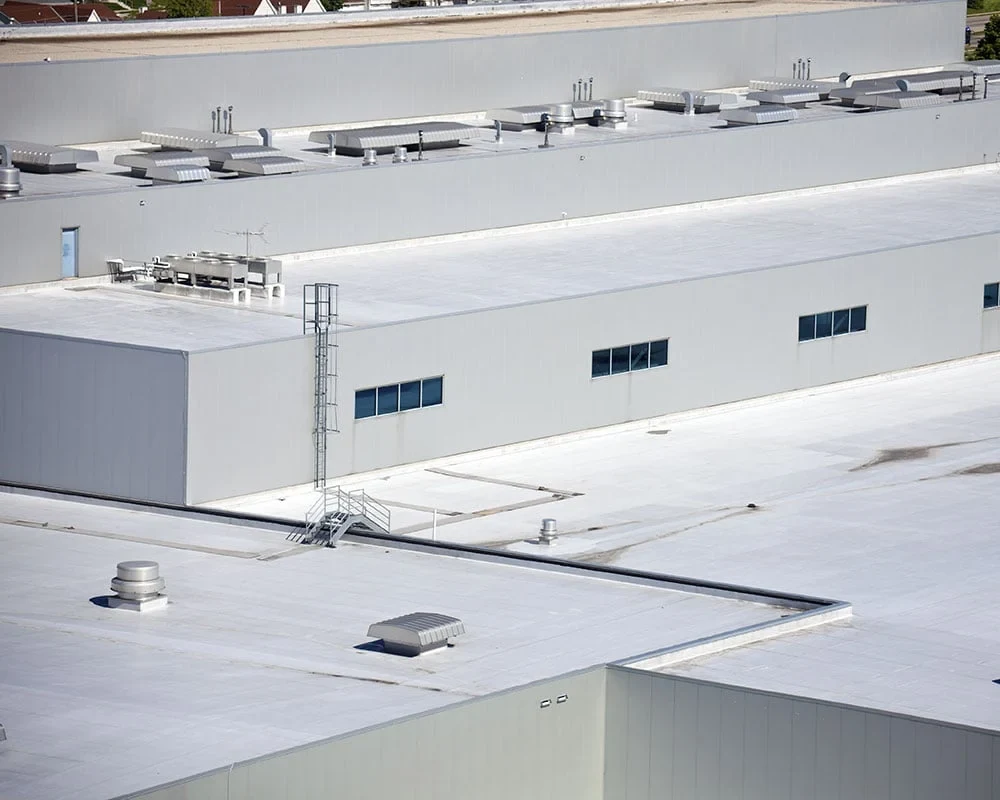
UMass Memorial's campuses and the biotech tenants filling space around Worcester's research institutions are putting more exhaust-heavy rooftop equipment on buildings that didn't need chemical-resistant membrane a decade ago. We're seeing more PVC specs on lab and medical building bids than we did five years back, largely because fume hood and exhaust stack locations on the roof create the kind of chemical exposure PVC handles better than TPO.
That shift hasn't reached retail or general office work in the same way, and we still spec TPO or EPDM on the majority of standard commercial reroofs across our service area.
- Hospital and medical campus roofs with kitchen exhaust equipment
- Biotech and lab buildings with fume hood or chemical exhaust stacks
- Restaurant and food-service buildings with rooftop grease exposure
- Manufacturing roofs near solvent or oil-based process exhaust
- Buildings where a prior membrane failed early from chemical exposure
Freeze-Thaw and Wind Performance Match TPO
PVC handles Worcester's freeze-thaw cycling and design wind loads on par with TPO; the two thermoplastic membranes share similar cold-weather flexibility and heat-welded seam mechanics, and neither has a clear structural advantage over the other in this climate. The decision between them almost always comes down to chemical exposure and cost, not winter performance.
Mechanically attached PVC follows the same wind-uplift calculation we run for TPO, based on the building's engineered wind zone rather than a generic assumption carried over from a different market.
What PVC Costs Against the Exposure It Prevents
PVC typically prices above both TPO gauges and EPDM on a per-square-foot basis, and that premium only makes financial sense against the cost of an early membrane failure from chemical exposure the building actually faces. We run that comparison for any owner considering PVC, showing what a shortened membrane life on a lower-cost alternative would likely cost against PVC's higher install price over the same period.
For a building without meaningful chemical exposure, we'll say so directly and recommend TPO instead, even when PVC is the more familiar name to some owners.
Flashing Detail Work Around Lab Exhaust Penetrations
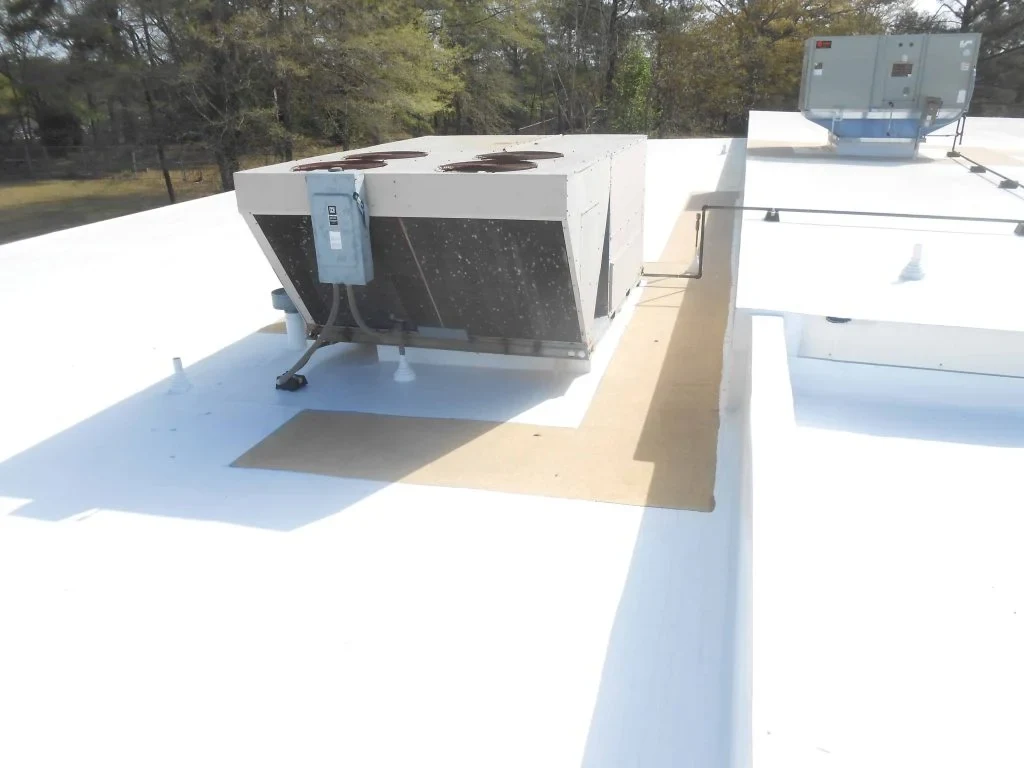
A PVC roof serving a biotech lab or hospital exhaust system typically carries more curb and stack penetrations than a standard retail or office roof, since fume hoods, makeup-air units, and exhaust stacks each need a separate flashed opening through the membrane. PVC's heat-welded detail work at those penetrations holds up to the same chemical exposure the field membrane resists, provided the flashing pieces are the same PVC formulation rather than a field-fabricated substitute.
We spec manufacturer-matched PVC flashing accessories on every lab or hospital exhaust roof rather than fabricating custom pieces from field membrane, since a mismatched material at a heavily used penetration is one of the more common points of early failure we see on chemical-exposure roofs.
Questions About PVC Roofing in Worcester
Does my building need PVC if it just has a standard rooftop unit?
Usually not. Without grease, oil, or chemical exhaust exposure, TPO typically performs just as well for considerably less cost.
How does PVC handle Worcester's snow load and freeze-thaw cycles?
On par with TPO. Both are heat-welded thermoplastics with similar cold-weather flexibility; PVC's advantage is chemical resistance, not cold-weather structural performance.
Can PVC be welded to an existing TPO roof during a repair?
No. The two membrane chemistries don't weld to each other reliably; a PVC patch needs PVC-compatible flashing and adhesive, not a direct weld to TPO.
Is PVC worth the added cost for a hospital kitchen exhaust roof?
In most cases, yes. The chemical exposure from kitchen exhaust degrades other membranes faster than the cost difference, over a typical service life, justifies choosing a cheaper alternative.
Does PVC require different maintenance than TPO?
Not significantly. Both benefit from periodic seam inspection and prompt patching of any exposure-related surface wear, with PVC generally showing better resistance around chemical contact points.