
Black EPDM's Cold-Climate Case for Worcester Roofs
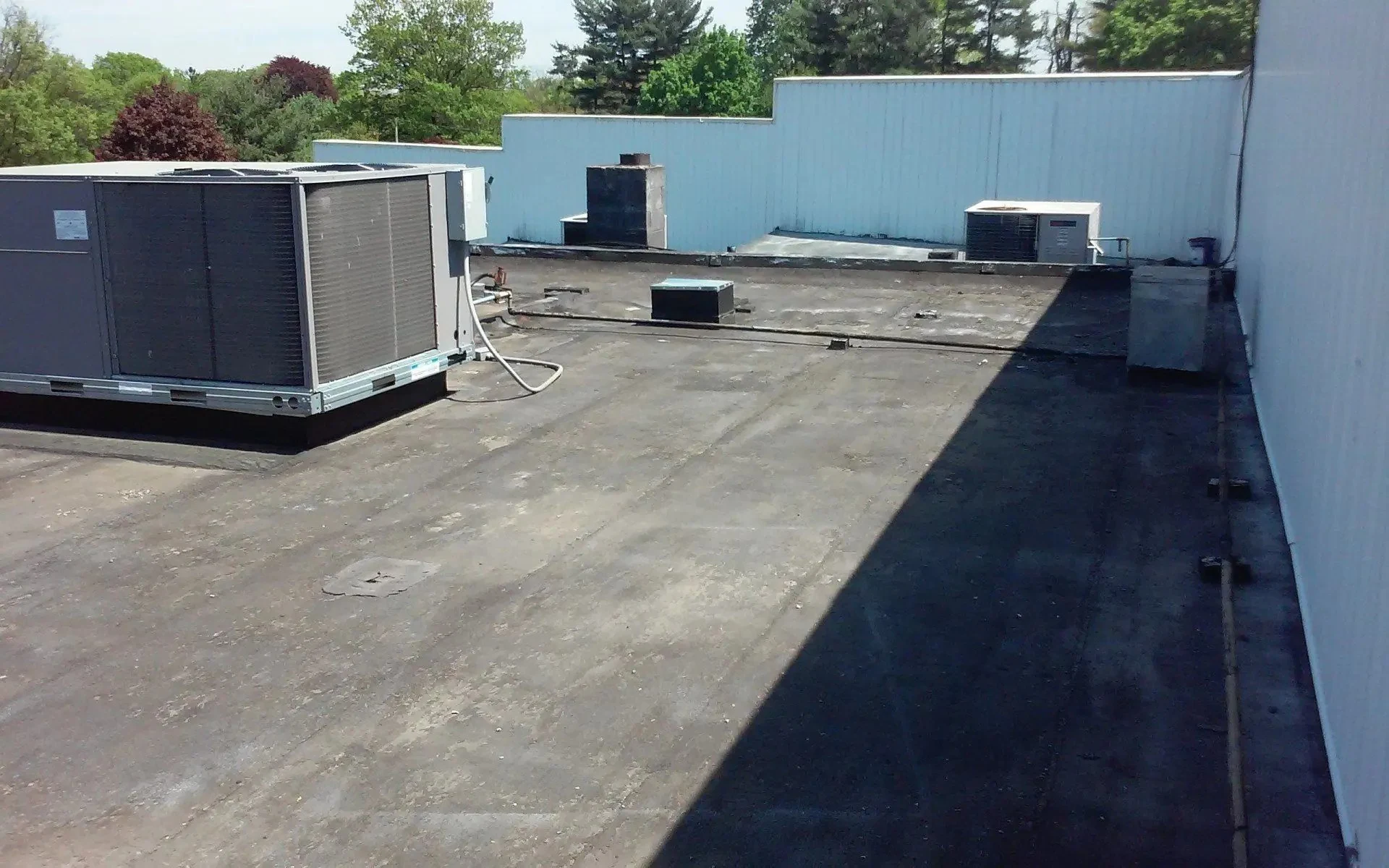
Black EPDM is the oldest single-ply chemistry still in wide use on Worcester commercial roofs, and in a market with this many freeze-thaw cycles and this much snow, the dark membrane's heat absorption is an actual performance argument, not simply a legacy habit. We still spec it on a steady share of reroofs, particularly recovers over older buildings that were EPDM to begin with.
Why Dark Membrane Still Makes Sense Here
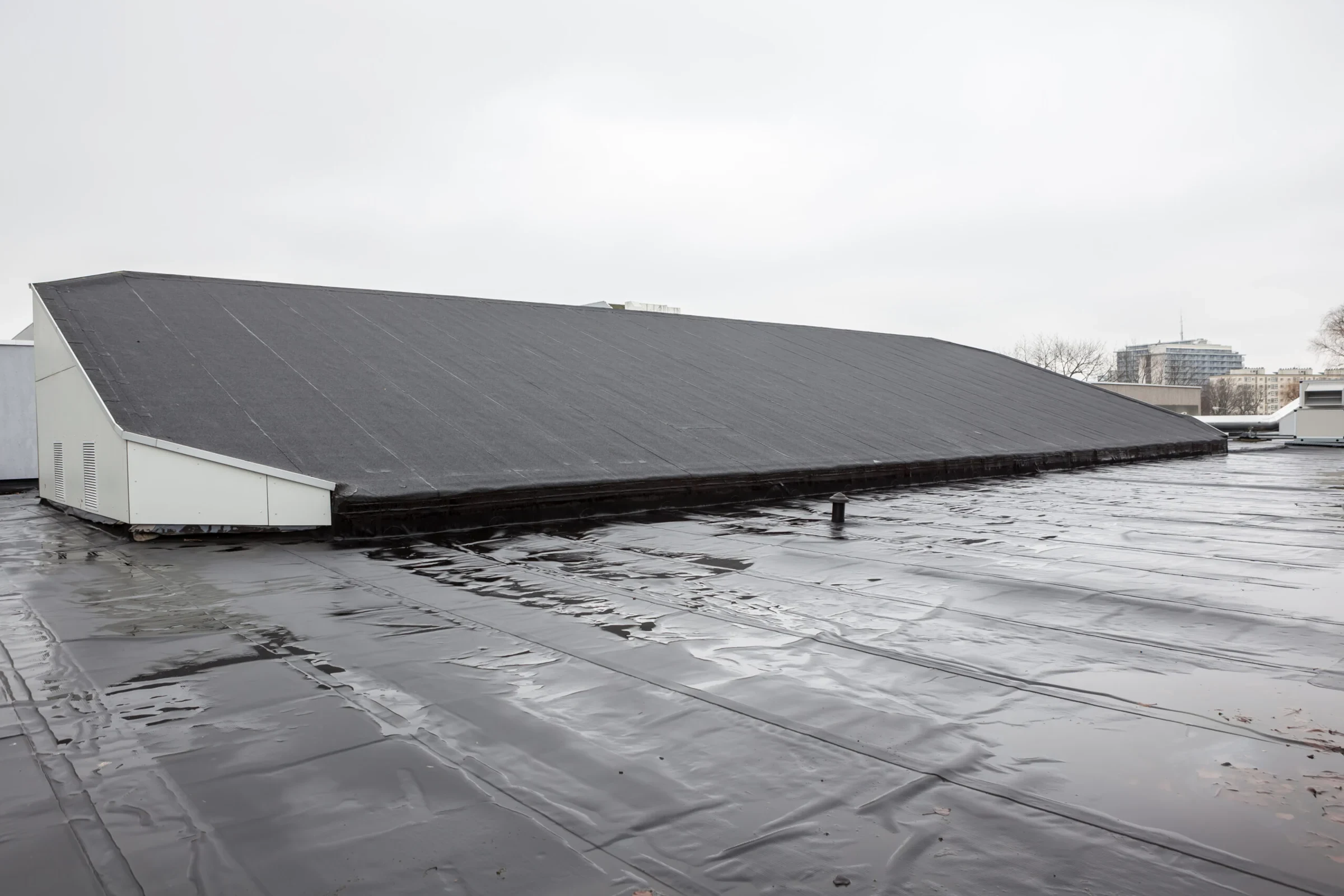
A black EPDM sheet absorbs more solar heat than a white TPO or PVC membrane, and in a climate where snow sits on a roof for weeks at a time, that extra heat gain helps shed snow and melt ice at the field faster than a reflective membrane would. On a building where summer cooling load isn't the dominant energy concern, that trade favors EPDM over a white membrane chosen mainly for reflectivity.
The membrane itself is a cured, vulcanized rubber sheet rather than a thermoplastic, which changes how it behaves at seams and how it ages. It doesn't reflect UV the way TPO does, but it also doesn't face the same thermoplastic-specific aging concerns some older TPO formulations had, and decades of installed EPDM roofs across New England back that track record.
Seam Chemistry: Tape and Adhesive, Not Heat Weld
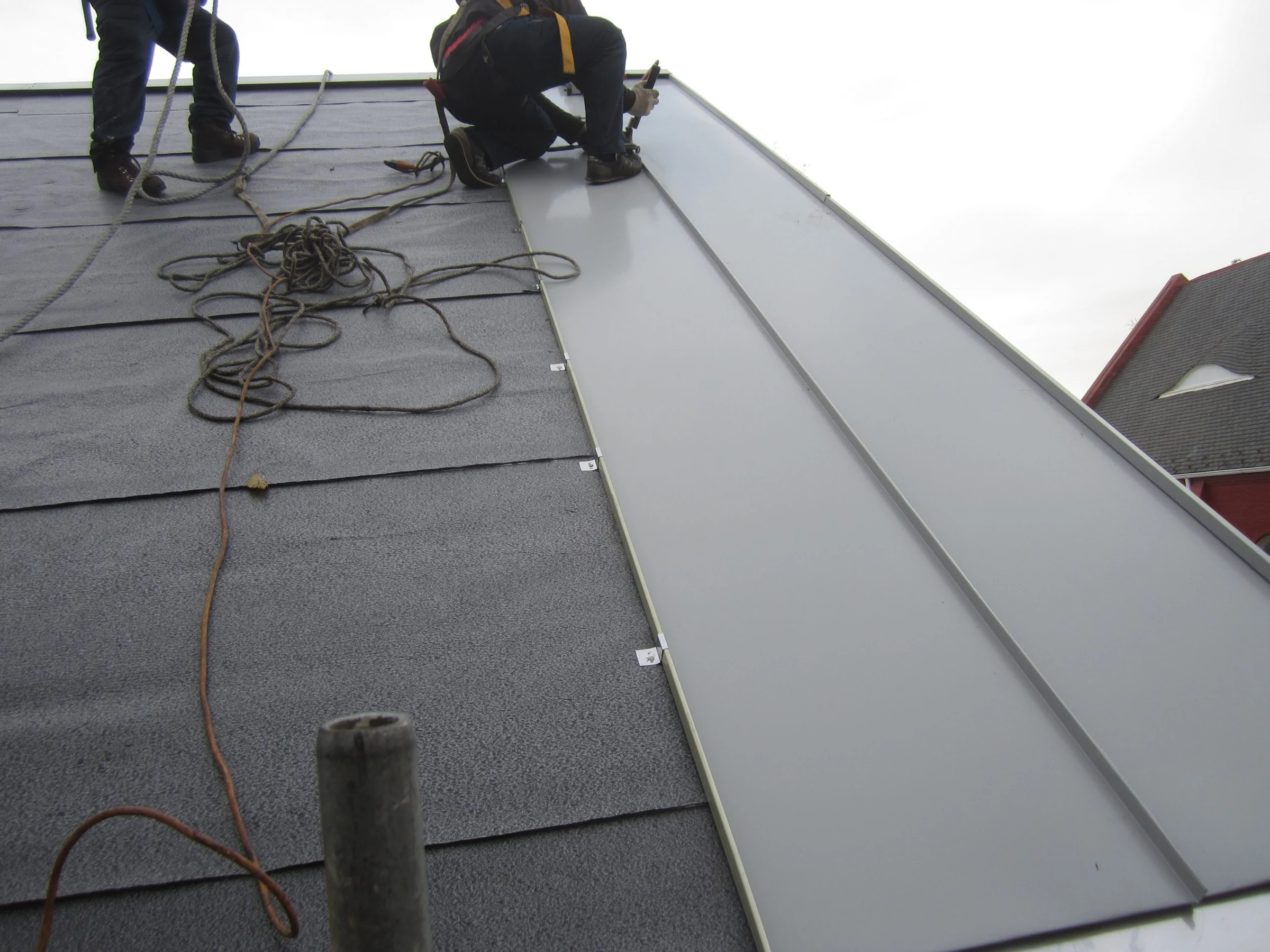
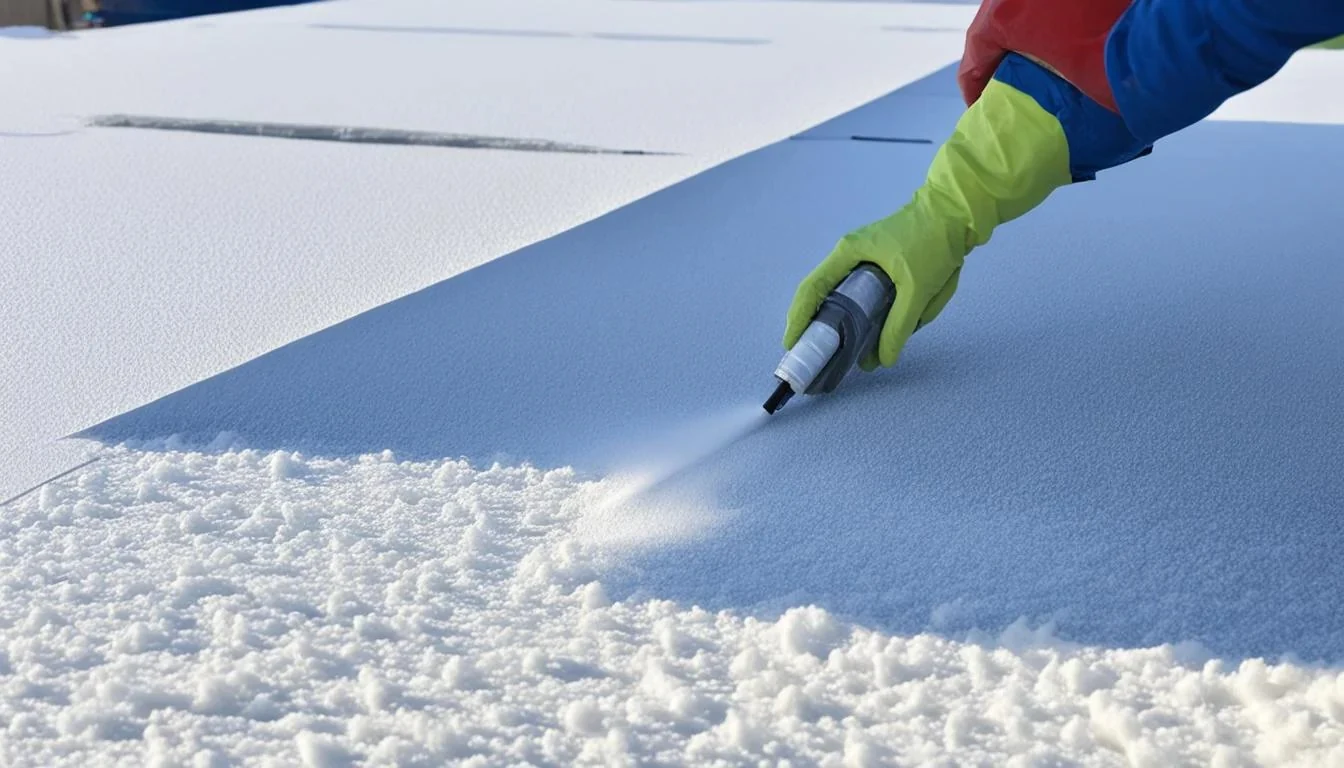
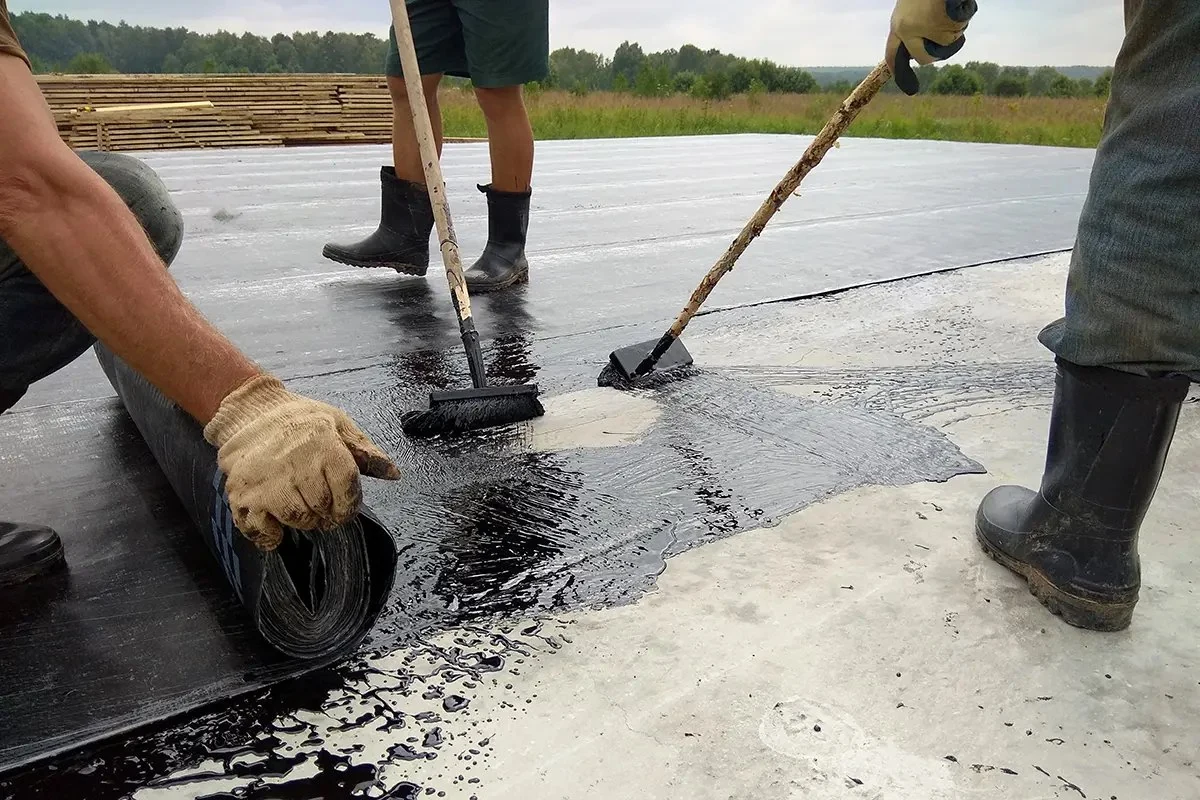
EPDM seams bond with seam tape or liquid adhesive rather than a hot-air weld, and that process has its own cold-weather rules. Primer and tape both need a minimum surface and ambient temperature to bond correctly, and a crew working a Worcester roof in late fall or early spring needs to track that temperature through the day rather than assuming morning conditions hold until quitting time.
A tape seam that's rolled correctly under the right temperature window performs reliably for decades; one installed outside that window can fail early, and because EPDM seams don't get the visual weld-line confirmation a TPO seam does, we inspect tape seams closely during installation rather than relying on appearance alone after the fact.
Freeze-Thaw Stress at the Laps
Worcester runs through more freeze-thaw cycles each winter than a coastal market, and every cycle puts mechanical stress on a seam as ice forms at a lap edge, expands, and releases. EPDM's seam adhesives are formulated for that kind of thermal cycling, but seam width and lap coverage still matter more in this climate than in one with a shorter winter, so we don't cut lap width down to the manufacturer's bare minimum on a Worcester roof.
Ponding water at a poorly sloped EPDM roof compounds the problem, since standing water that freezes and thaws repeatedly at a seam does more damage over a winter than the same water sitting on a well-drained roof. We flag slope and drainage issues on any EPDM reroof before they turn into a seam problem two winters later.
- Recover jobs over existing EPDM roofs with sound substrates
- Older mill and industrial buildings converted to office or storage use
- Roofs where snow-shedding matters more than summer reflectivity
- Buildings without significant rooftop mechanical foot traffic
- Simple low-slope roofs with a straightforward drainage plan
- Budget-driven reroofs where a proven, lower-cost membrane fits
Cost and Availability Against TPO
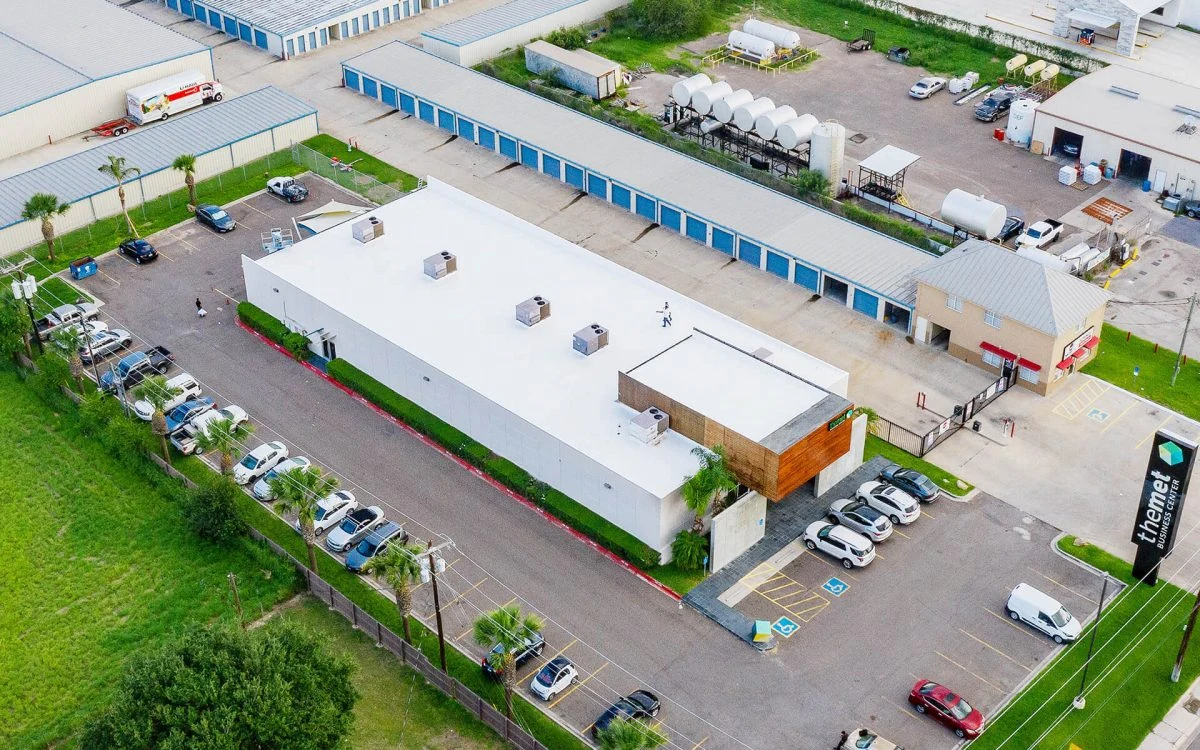
Black EPDM typically prices at or below 60-mil TPO on a per-square-foot installed basis, which keeps it in the conversation for owners running a tight reroof budget across several buildings. Material cost isn't the only factor, though, and we walk owners through the tradeoff between EPDM's lower up-front cost and TPO's reflective, heat-welded seam advantages before defaulting to either one.
Massachusetts's stretch energy code sets a minimum insulation value for roof assemblies that Worcester and a number of surrounding towns have adopted, and that requirement applies to the insulation layer under the membrane, not the membrane choice itself. An EPDM roof meets that code the same way a TPO roof does, through the polyiso or equivalent board beneath it, so the membrane decision and the code compliance decision are separate conversations on every reroof we bid.
Recover Candidates on Worcester's Older Rubber Roofs
A lot of the EPDM we install in Worcester today goes down as a recover over an existing black EPDM roof rather than a brand-new install on bare deck. Mill-conversion buildings around the Canal District and older institutional roofs across the city were commonly specced in EPDM decades ago, and where that original substrate has stayed dry and intact, recovering with a fresh EPDM field sheet is often the more direct path than a full tear-off.
We check the existing membrane's adhesion and the deck's moisture content before recommending recover, and on a building where the original EPDM has held up structurally but simply aged out its UV and weather exposure, that inspection usually confirms recover is the right call rather than a full replacement.
What Worcester Owners Ask About Black EPDM
Does black EPDM increase summer cooling costs compared to white TPO?
It can, on a building where rooftop heat gain drives cooling load. We weigh that against EPDM's snow-shedding and lower material cost on a case-by-case basis rather than defaulting to one membrane.
How long do EPDM seams typically last in this climate?
A correctly installed tape or adhesive seam, with adequate lap width, holds up for decades of freeze-thaw cycling. Seam failures we see usually trace back to install conditions or inadequate lap coverage, not the membrane itself.
Can EPDM be installed as a recover over an existing rubber roof?
Often, yes, once we've confirmed the existing substrate is dry and structurally sound. We check that before quoting recover over a full tear-off.
Does black EPDM meet Massachusetts's stretch code insulation requirement?
The membrane color doesn't affect code compliance; the insulation board beneath it does. We spec insulation thickness to meet the applicable code regardless of which membrane goes on top.
Is EPDM a good fit for a roof with a lot of ponding water?
Not without addressing the slope problem first. Ponding stresses any membrane's seams over repeated freeze-thaw cycles, and we fix drainage before or during a reroof rather than installing new membrane over the same standing-water issue.