Roofing for Manufacturing Plants Around Worcester
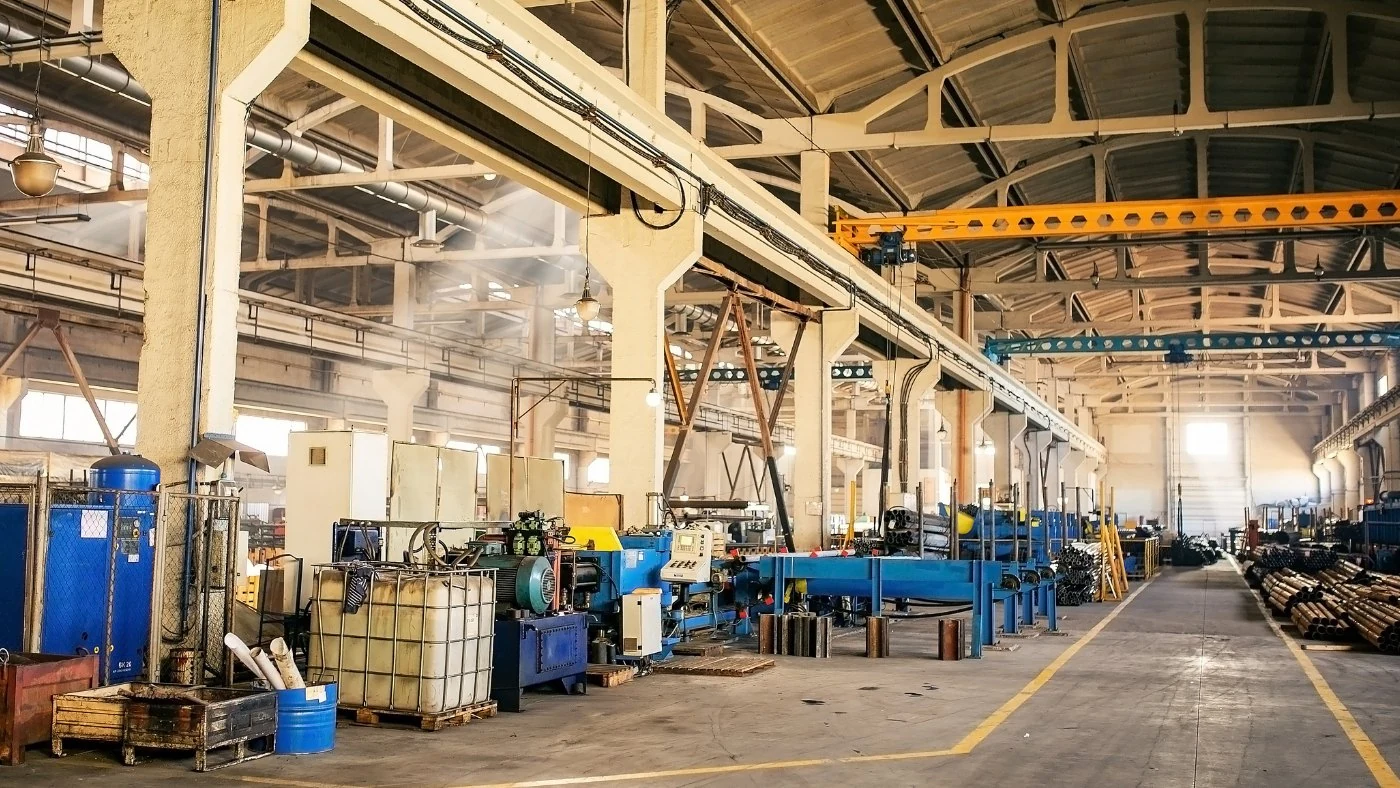
Central Massachusetts still runs a real manufacturing base , plastics injection molding, precision laser and optics production, mill buildings converted to light industrial use, and metalworking shops scattered from Worcester out through Leominster and Oxford. A roof over an active production floor has to survive things an office roof never sees.
Process Heat and Exhaust Change the Roof System
Manufacturing roofs carry exhaust stacks, process vents, and sometimes direct heat exposure from equipment below that a typical commercial roof was never designed around. We check membrane compatibility against actual roof surface temperatures near exhaust points before recommending a system, since some low-cost membranes degrade faster under sustained heat exposure than the manufacturer's general spec sheet suggests.
Plastics and injection molding facilities in particular tend to run process exhaust with residue that can affect membrane adhesion and coating performance over time. We flag that during inspection and recommend systems and coatings suited to that exposure rather than a standard specification.
Scheduling Around Production, Not Around Us
A manufacturing plant doesn't stop running because a roof needs work. We plan tear-off and hot work in sections that never leave process equipment exposed, and we coordinate with plant operations on shift schedules so noisy work happens when it interferes least with production, quality control, or any equipment sensitive to vibration.
Planned shutdown windows , a plant's annual maintenance week or a slower production period , are often the best time to schedule larger scope, and we ask about that shutdown calendar early in the bidding process so we can plan around it instead of working against a live production line.
- Injection molding and plastics plants
- Precision manufacturing and optics facilities
- Metal fabrication and machine shops
- Converted mill and industrial buildings
- Food and beverage processing facilities
- Warehouse and light assembly operations
Heavy Rooftop Equipment Loads
Manufacturing buildings often carry rooftop dust collection systems, process exhaust fans, and mechanical equipment far heavier than what a standard office roof supports. Before we recommend a recover system, we check structural capacity against the current equipment load, since adding roofing weight on top of an already heavily loaded deck can push a structure past what it was engineered for.
Older mill buildings converted to modern manufacturing use sometimes have roof structures that predate the current equipment loads entirely. We flag structural questions to a licensed engineer rather than guessing on a building with that kind of history.
Snow Load on Wide Industrial Spans
Manufacturing and warehouse roofs often use the same kind of long clear-span construction as a distribution building, which means the same drift accumulation risk behind rooftop units, dust collectors, and parapet walls during a heavy Massachusetts winter. We evaluate drift zones on every industrial roof we inspect and flag any area where accumulated snow could exceed the original design load.
Budgeting Against Downtime Cost
For a manufacturing operator, the real cost of a roof failure goes well beyond the repair itself , it's the production downtime and potential equipment damage from water intrusion over a process line. We price preventive maintenance and phased replacement against that downtime risk, and most plant managers we work with find that a planned maintenance program costs considerably less over five years than reacting to failures one at a time.
Coordinating With Environmental and Safety Compliance
Manufacturing facilities often operate under environmental permits that touch the roof directly , stormwater runoff requirements for a roof draining near a retention pond, or air quality considerations for a facility with process exhaust venting through the roof deck. We coordinate our work with a plant's EHS staff on anything that intersects those requirements, since a roofing change that affects drainage patterns or exhaust clearance can have compliance implications beyond the roof itself.
Confined space and fall protection rules also tend to be stricter on an active manufacturing site than on a typical commercial building, and we follow the plant's own safety orientation and lockout-tagout procedures for any roof access that intersects operating equipment below. Our crews complete whatever site-specific safety orientation a plant requires before mobilizing, rather than treating that step as optional paperwork to get through quickly. We keep documentation of that training on file for the duration of the project in case a plant's safety officer needs to reference it, and we update it whenever a new crew member rotates onto the job.
Questions From Plant Managers
Can you work without shutting down production?
In most cases, yes. We sequence tear-off in sections that keep equipment covered and dry, and we schedule the loudest work around your shift patterns.
Do you check whether our roof can handle a recover system given existing equipment loads?
Yes, we evaluate structural capacity against current rooftop equipment before recommending a recover versus tear-off, and we bring in a licensed engineer when the building's history calls for it.
How do you handle process exhaust affecting the membrane?
We inspect the area around exhaust points for heat and residue exposure and recommend membrane and coating systems suited to that specific condition rather than a generic spec.
Can you schedule work around our annual shutdown week?
Yes, and we recommend telling us about that window early in the bidding process so we can plan larger scope work around it.
Is a maintenance program cheaper than fixing problems as they come up?
For most manufacturing operators, yes, mainly because it avoids production downtime and equipment damage from an unplanned failure, on top of the roofing repair cost itself.