
PVC Membrane for Grease, Chemical, and Lab Exhaust Exposure
PVC costs more per square foot than TPO or EPDM, and we only spec it when the roof has an exposure problem the cheaper membranes can't handle. Grease from kitchen exhaust and chemical exposure from lab or industrial vents both degrade TPO and EPDM over time, and PVC is formulated to resist both.
Where Grease Exposure Shows Up in This Market
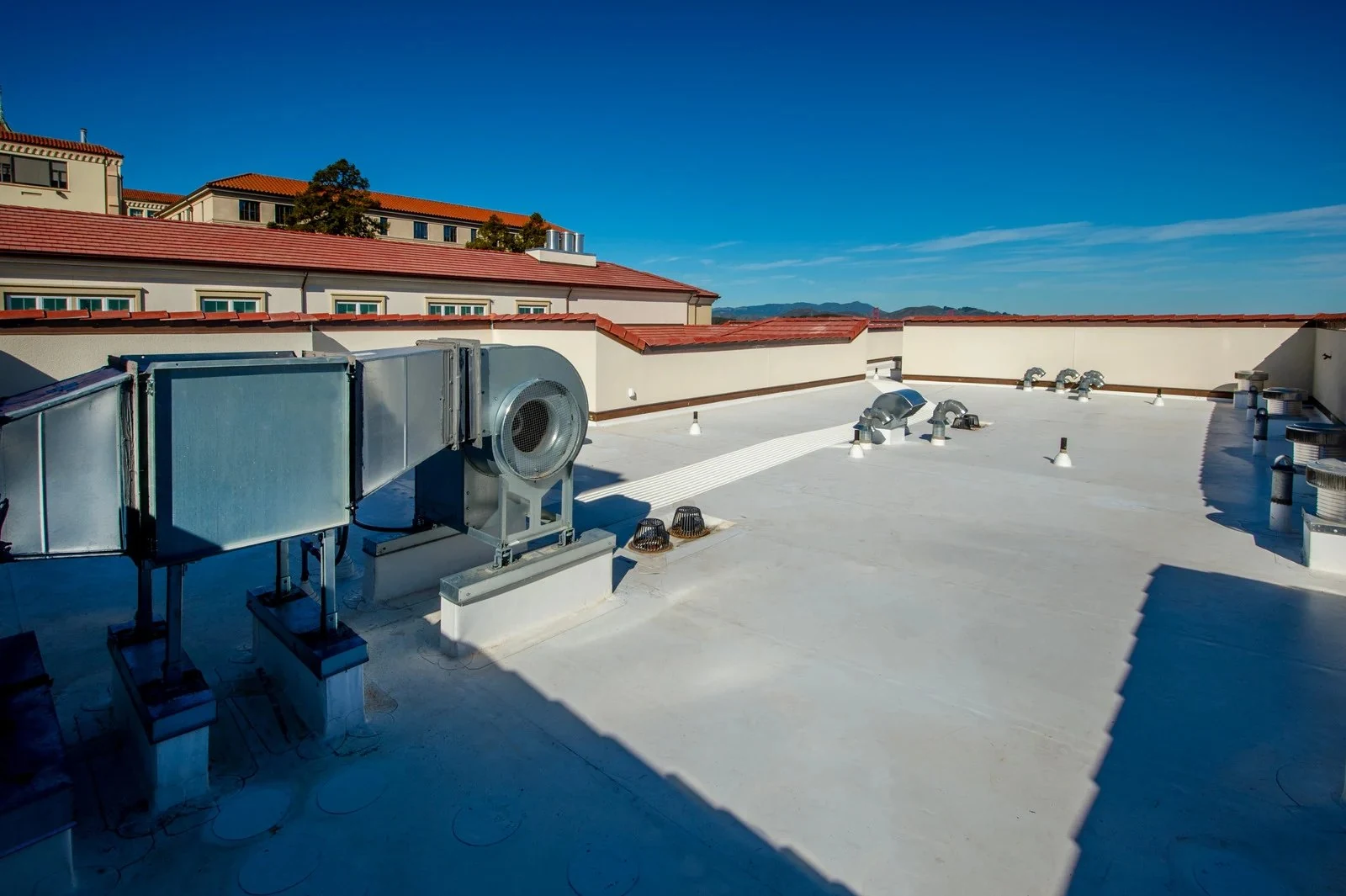
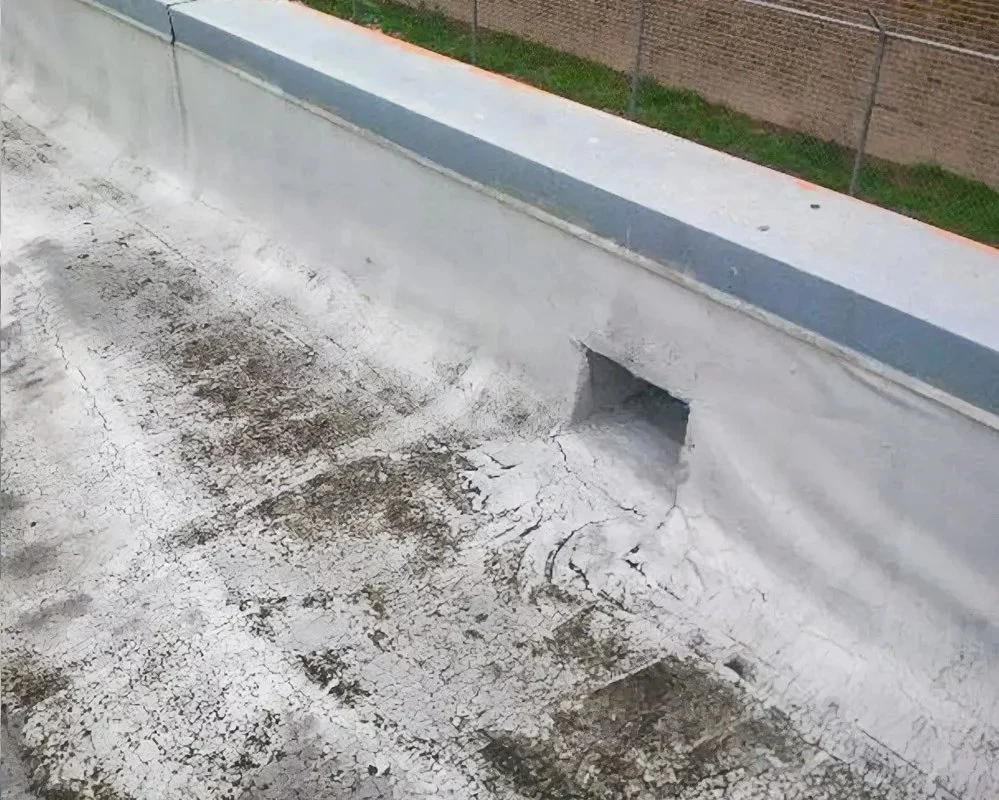
College dining halls and the restaurant corridor along Shrewsbury Street both put kitchen exhaust discharge directly onto rooftop membrane, and grease-laden air breaks down standard TPO and EPDM faster than a clean roof in the same climate. We see this most on buildings near WPI, Clark, and Holy Cross where dining service runs kitchen exhaust fans for extended hours, and on standalone restaurant buildings with rooftop kitchen equipment.
A grease trap or containment system at the exhaust discharge point helps, but it doesn't eliminate the exposure, and a lot of older buildings we inspect don't have one installed correctly. Where grease exposure is a known issue, PVC is worth the added cost over the membrane's service life compared to replacing a degraded TPO roof years early.
Chemical and Solvent Exposure From Lab and Biotech Buildings
The lab and biotech space building out around UMass Chan Medical School runs fume hood and process exhaust that can carry solvent vapor onto the roof surface. PVC's chemical resistance holds up better against this kind of exposure than TPO, which can soften or degrade with repeated solvent contact over years of operation.
We ask about exhaust type and discharge location early in any lab or biotech roof quote, because the membrane recommendation changes based on what's actually coming out of the stacks rather than the building's general use category alone.
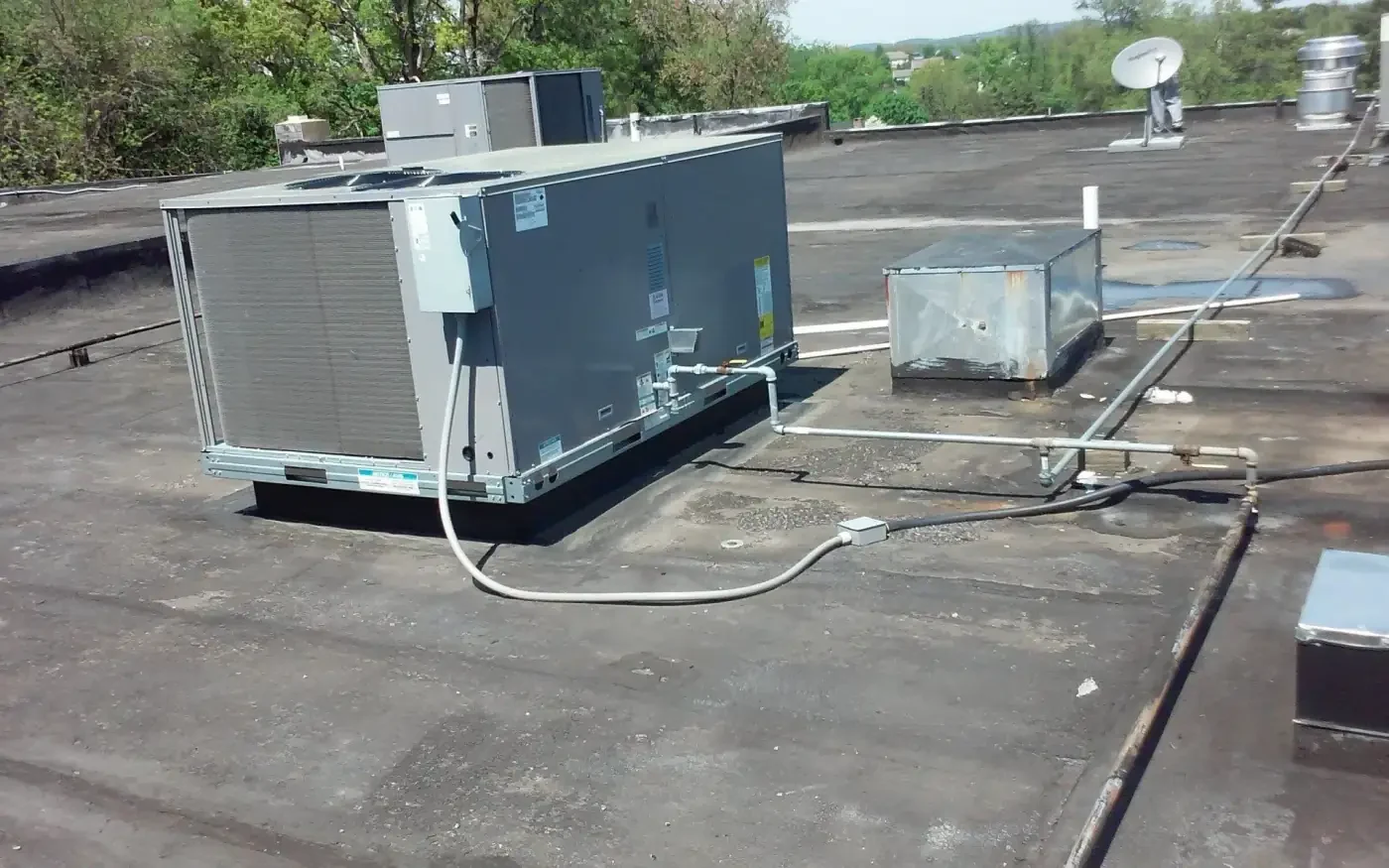
Some lab buildings run multiple exhaust types off the same roof, mixing general HVAC discharge with process exhaust tied to specific bench work. We map every stack location before finalizing a membrane recommendation, since a roof can have both low-exposure and high-exposure zones that call for different detail treatment even under one membrane system.
Wind Uplift and Seam Strength
PVC seams are hot-air welded like TPO, and PVC sheet generally tests at a higher seam strength than TPO of comparable thickness, which matters on taller buildings and open sites with real wind exposure near the Route 146 corridor. Nor'easter wind loads are a real design factor here, not an edge case, and we run the uplift math for the specific building height and site exposure before finalizing attachment method.
What we confirm before pricing a PVC roof:
- Exhaust type and discharge location: grease, solvent, or general HVAC
- Mil thickness matched to exposure severity and expected traffic
- Attachment method sized to building height and wind exposure
- Seam welding quality and inspection at every lap
- Flashing detail at curbs, drains, and any exhaust penetrations
- Warranty terms specific to chemical exposure coverage
Cost Against TPO and EPDM Over the Roof's Life
PVC typically runs the highest cost per square foot of the three common single-plies we quote in Worcester. On a roof without grease or chemical exposure, that premium doesn't buy much, and we'll say so rather than upsell a membrane the building doesn't need. On a roof with real exposure, an early TPO or EPDM failure and replacement usually costs more over ten to fifteen years than paying the PVC premium up front.
Winter Installation and Seam Welding
Like TPO, PVC seam welding needs the membrane dry and above a minimum temperature to bond correctly, which limits our install window to roughly April through November in this climate. Grease-exposed roofs sometimes need emergency patching in the off-season if a leak develops, and we handle that as temporary dry-in until a proper weld can be made in the spring.
Maintenance Access and Grease Containment
A PVC membrane resists grease breakdown better than TPO or EPDM, but it doesn't eliminate the maintenance case for a containment system at the exhaust discharge point. We recommend pairing a PVC reroof with a grease trap or diverter where one isn't already installed, since containment reduces how much grease actually reaches the membrane in the first place and extends the interval between deep cleanings.
Roof access for cleaning also matters more on a grease-exposed membrane than on a standard commercial roof. We route walkway pads to the exhaust discharge zones on these installs so maintenance crews aren't walking directly on bare membrane during routine cleaning visits.
Questions Worcester Owners Ask About PVC
Do I need PVC if my building doesn't have a restaurant or lab?
Usually not. Without grease or chemical exposure, TPO or EPDM typically gets you comparable performance at a lower cost per square foot.
How do you know if grease exposure is bad enough to require PVC?
We look at exhaust fan hours, discharge location relative to the membrane, and whether a grease containment system is installed and working correctly.
Is PVC harder to install in cold weather than TPO?
The same seam welding temperature limits apply to both, so the install season is roughly the same for each membrane.
Does PVC last longer than TPO on a normal roof?
On a roof without unusual exposure, the difference is less about longevity and more about paying for chemical resistance you may not need.
Can PVC be installed over an existing EPDM roof?
Only after we confirm the existing insulation and deck condition support a recover, and that the two membrane types are compatible at the transition details.