
R-Panel Metal Roofing for Worcester's Industrial and Distribution Buildings
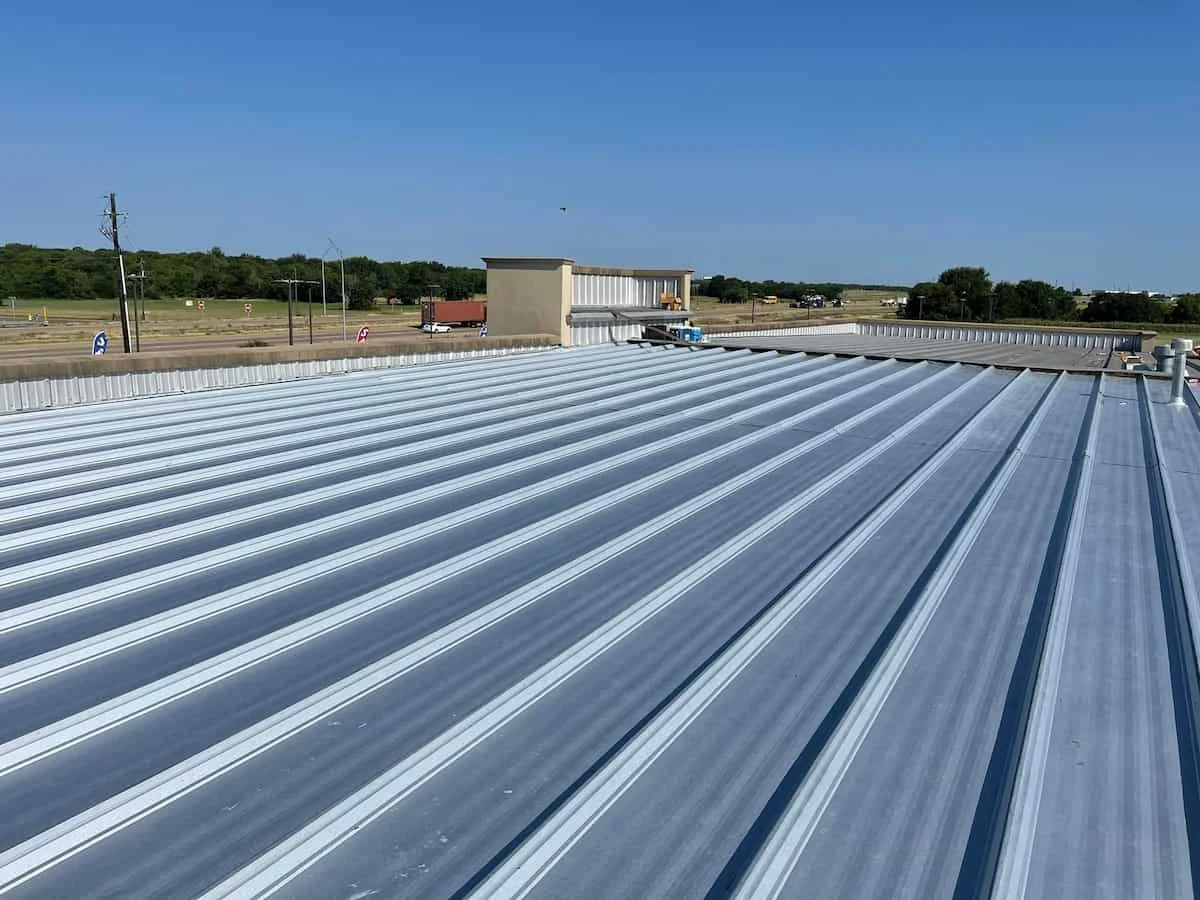
R-panel is exposed-fastener metal roofing, the panel type most commonly built onto low-slope industrial and distribution buildings along the Route 146 and I-290 corridors. It costs less per square foot than standing seam, and the tradeoffs that come with that lower price are what we walk owners through before pricing a job.
Exposed Fasteners Are the Real Cost Difference
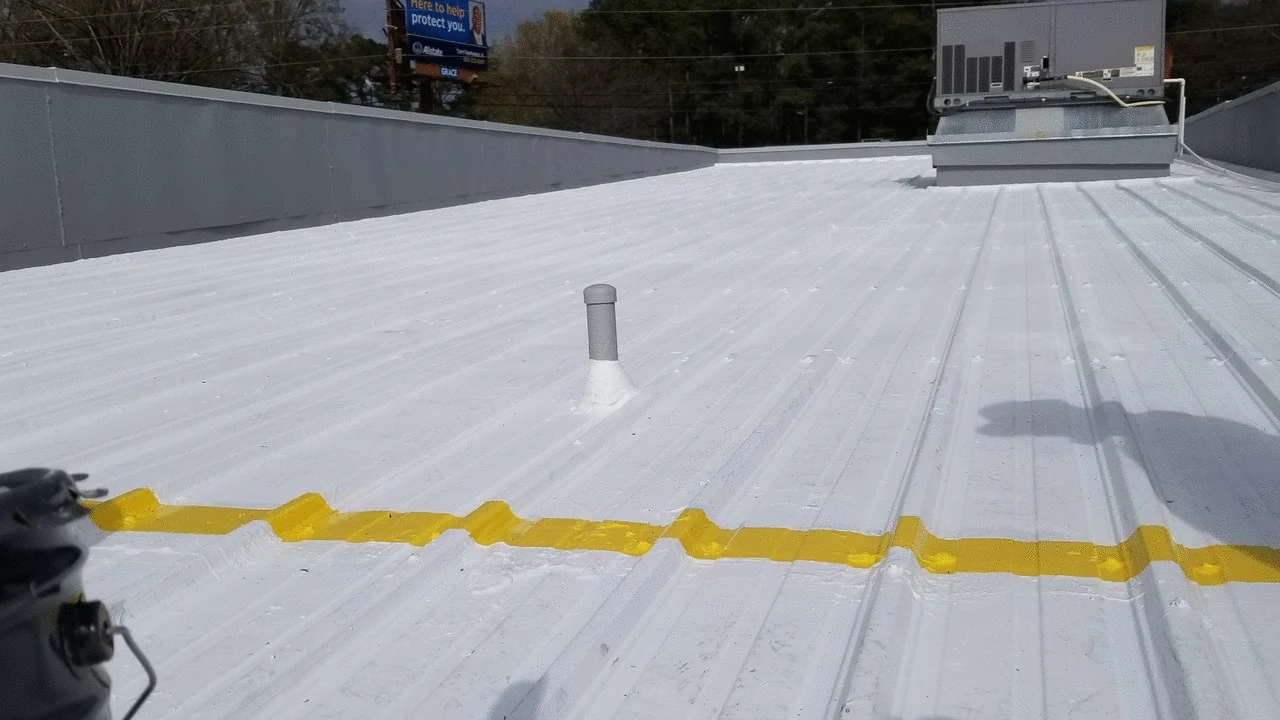
R-panel is screwed directly through the panel into the structural framing, unlike standing seam's concealed clip system, which is the main reason it costs less to install. Every one of those exposed fasteners is a potential leak point once its rubber washer ages and hardens, typically somewhere between ten and twenty years depending on sun exposure and washer quality.
We spec a quality fastener with a durable washer and set a maintenance expectation with the owner up front: exposed-fastener roofs need periodic fastener inspection and re-torquing or replacement that a standing seam roof doesn't require, and that maintenance cost is part of the real lifecycle number, not something to leave out of the comparison.
Where R-Panel Fits in Worcester's Building Stock
Warehouse and distribution buildings near the airport and along the Route 146 corridor are the most common R-panel candidates in our market, along with light-industrial buildings that don't need the finish quality or snow-shedding profile of standing seam. Cost per square foot is usually the deciding factor for these building types, since the roof isn't part of a public-facing architectural presentation.
We also see R-panel specified as a retrofit over an existing metal roof, where new panels get installed over the old structure using a hat channel or purlin system rather than tearing off the original roof entirely.
Condensation Control in a Cold Climate
Metal roofs without proper vapor management can develop condensation on the underside of the panel, especially over conditioned warehouse space where warm, moist interior air meets a cold metal panel through a Central Mass winter. That condensation drips onto stored inventory or racking below, which is a real problem on distribution buildings running climate-controlled storage.
We address this with a vapor barrier and appropriate insulation, usually a fiberglass blanket system between the purlins, sized to the building's interior humidity and temperature conditions rather than a generic default.
What we confirm before pricing an R-panel roof:
- Panel gauge and fastener quality sized to expected service life
- Vapor barrier and insulation package for interior condensation control
- Whether the job is new panel installation or a retrofit over existing metal
- Purlin or structural spacing and whether it supports the panel span
- Flashing detail at ridges, eaves, and wall transitions
- Fastener inspection schedule as part of the maintenance plan
Retrofit Over an Existing Metal Roof
Retrofitting new R-panel over an aging metal roof avoids the cost and disruption of a full tear-off, and it's a common path for occupied distribution buildings that can't shut down operations for an extended reroof. We check the existing structure's condition and the added weight of a second panel layer before recommending retrofit over tear-off, the same structural check we run on any recover decision.
Where Standing Seam Is the Better Call Instead
On a steep-slope building, a public-facing property, or anywhere snow-shedding performance matters more than upfront cost, standing seam's concealed fastener system and better wind and snow performance usually justify the premium over R-panel. We spec R-panel specifically where the building's use and budget call for the lower-cost option.
Sizing the Maintenance Budget Into the Lifecycle Number
An R-panel roof's real cost per square foot over its service life includes the periodic fastener maintenance we mentioned above, and we build that into the lifecycle comparison against standing seam rather than quoting only the installed price. A distribution building owner comparing bids should ask what fastener re-torquing or washer replacement schedule the contractor is assuming, since a bid that skips that line item is understating the roof's real cost of ownership over fifteen or twenty years.
We put a maintenance line item directly into every R-panel proposal so the comparison against standing seam reflects the full cost picture rather than only the day-one installed price.
A distribution building that runs continuous operations often has more flexibility to schedule fastener maintenance during planned downtime than a building with tighter shipping windows, and we build the inspection schedule around the owner's actual operating calendar rather than a generic annual date. That coordination matters most in the months right before and after peak snow load, when a fastener issue is most likely to turn into an active leak.
Questions Worcester Owners Ask About R-Panel
How long do exposed fasteners actually last?
Typically ten to twenty years before the washers need inspection or replacement, depending on sun exposure and the fastener quality originally installed.
Can R-panel be installed over my existing metal roof?
Often yes, if the existing structure can support the added weight and the panel spacing works for a retrofit system. We check both before recommending it.
Why is condensation dripping inside my warehouse?
This usually points to inadequate vapor barrier or insulation between the interior conditioned air and the cold metal panel, which we can address without a full reroof in some cases.
Is R-panel a bad choice for a public-facing building?
Not necessarily, but standing seam's cleaner finish and concealed fasteners are usually the better call where appearance matters.
How often should fasteners be inspected?
We recommend a periodic inspection as part of a maintenance program, with frequency depending on the roof's age and sun exposure.