
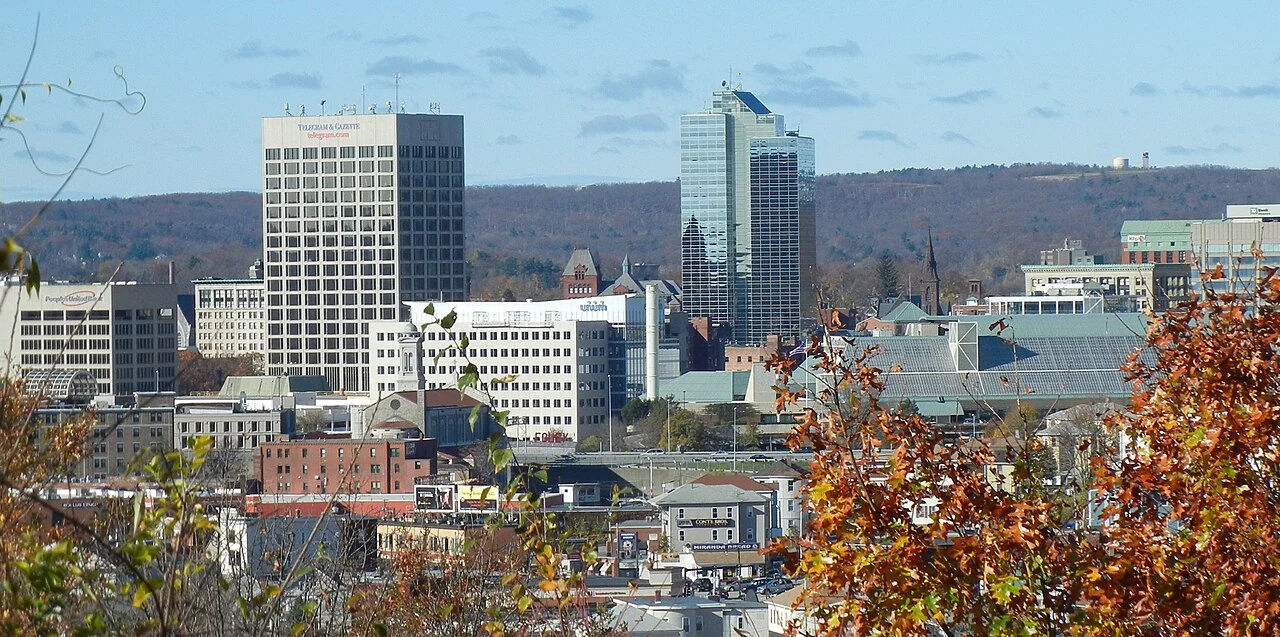
Commercial Roofers in Oxford
Commercial roofing in Oxford should begin with a documented assessment of membrane condition, seams, flashings, drainage, penetrations, and moisture before repair, coating, or replacement is selected. Oxford is a small town by square footage but a real roofing job by demand, mainly because IPG Photonics runs precision laser manufacturing here, and buildings supporting that kind of operation need roof performance that a typical light-industrial building doesn't. The rest of Oxford's commercial roof stock is modest Route 12 storefronts and small plazas, and we don't pretend those need the same rigor, but the manufacturing side of town gets treated with real attention to moisture and temperature control.
Roof Insulation and Temperature-Sensitive Manufacturing
Laser and optics manufacturing depends on tight environmental control inside the building, since temperature swings and humidity changes affect the precision of the equipment and the materials being processed. A roof does more work than serving as a weather barrier for a building like this, it's part of the building's thermal envelope holding that internal environment stable, and insulation R-value and vapor barrier detailing matter more here than on a standard warehouse where a few degrees of swing doesn't affect anything downstream. We spec insulation thickness and vapor retarder placement specifically for buildings with tight environmental tolerances rather than defaulting to a standard commercial insulation package.
Moisture intrusion is a bigger deal on these roofs too, for reasons beyond interior damage risk, also because unexpected humidity swings from a slow leak can affect sensitive equipment or in-process materials before anyone notices water on the floor. We push harder on infrared moisture scanning during inspection on manufacturing roofs like this, since a subsurface wet spot that hasn't yet broken through to an interior leak is exactly the kind of problem that causes quiet equipment issues before it causes an obvious roof leak.
Rooftop Mechanical Load for Cleanroom-Adjacent Space
Environmental control for precision manufacturing space usually means more rooftop mechanical tonnage than a comparably sized standard industrial building, since maintaining tight temperature and humidity tolerances takes more HVAC capacity than simple space heating and cooling. That added rooftop weight and the added curb count both factor into the structural and drainage review we run before any roofing work, and we treat every mechanical curb here as a priority flashing detail rather than a routine one, since a leak at one of these curbs risks the process environment as much as the roof deck itself.
Route 12 Retail Strip: A Simpler Scope
The commercial strip along Route 12 through Oxford is standard small-plaza retail, modest square footage, straightforward TPO or EPDM membrane, and the usual multi-tenant drainage considerations we check on any strip center in Worcester County. We price this work honestly against its actual complexity rather than treating every Oxford job like a precision manufacturing project, since a nail salon or a sandwich shop roof doesn't need cleanroom-grade insulation detailing.
- Insulation R-value and vapor barrier detailing matched to interior environmental tolerance
- Infrared moisture scanning prioritized on roofs above temperature-sensitive operations
- Mechanical curb flashing treated as priority detail given added HVAC tonnage
- Structural review covering added rooftop equipment weight for tight-tolerance space
- Retail strip roofs scoped and priced separately from manufacturing-grade requirements
Emergency Response Priorities for Sensitive Operations
When a leak does happen above manufacturing space with sensitive equipment or in-process material below, our first move is stopping active water intrusion and containing it, followed immediately by documentation the facility can use for its own equipment or product loss claims, which are usually handled separately from the building's roof claim. We coordinate directly with facility engineering staff on what areas need protecting first, since the priority isn't always the same as it would be in a standard warehouse. That coordination usually starts before the roof crew is even on site, with a quick call to identify which rooms or process lines sit directly under the affected roof section.
Planning Roof Work Around Production Schedules
Manufacturing operations running continuous or near-continuous production shifts need roof work scheduled around actual downtime windows rather than a standard weekday timeline, and we build project schedules around whatever maintenance or shutdown windows the facility can offer rather than assuming standard business-hours access. That sometimes means night or weekend work for the sections directly above active production floors, with the less sensitive sections handled on a normal schedule. Splitting the schedule this way costs more in labor hours than a single continuous crew shift would, but it keeps the plant running instead of forcing a production stoppage to accommodate the roof.
Oxford Roofing Questions
Does a manufacturing roof need different insulation than a standard warehouse?
Yes, when the building maintains tight interior temperature or humidity tolerances. Insulation thickness and vapor barrier placement get specified around that requirement rather than a generic commercial package.
How do you find a roof leak before it shows up inside the building?
Infrared moisture scanning identifies subsurface wet insulation before it breaks through to a visible interior leak, which matters more on roofs above sensitive equipment where even minor humidity changes can be a problem.
Can roof work happen around a continuous production schedule?
Yes. We build the project schedule around whatever shutdown or low-activity windows the facility can provide, which sometimes means night or weekend work above active production areas.
Why do rooftop mechanical curbs get extra attention on these buildings?
Environmental-control HVAC systems add more rooftop tonnage and more curbs than a standard building, and a flashing failure at one of these curbs risks the process environment inside as much as ordinary roof leakage, which is why we won't treat it as a routine flashing repair.
Is a retail strip roof in Oxford priced the same as a manufacturing building roof?
No. Retail strip roofs get a standard commercial scope and price, while manufacturing buildings with tight environmental tolerances get the added insulation, moisture-scanning, and curb-detailing work that their equipment requires.